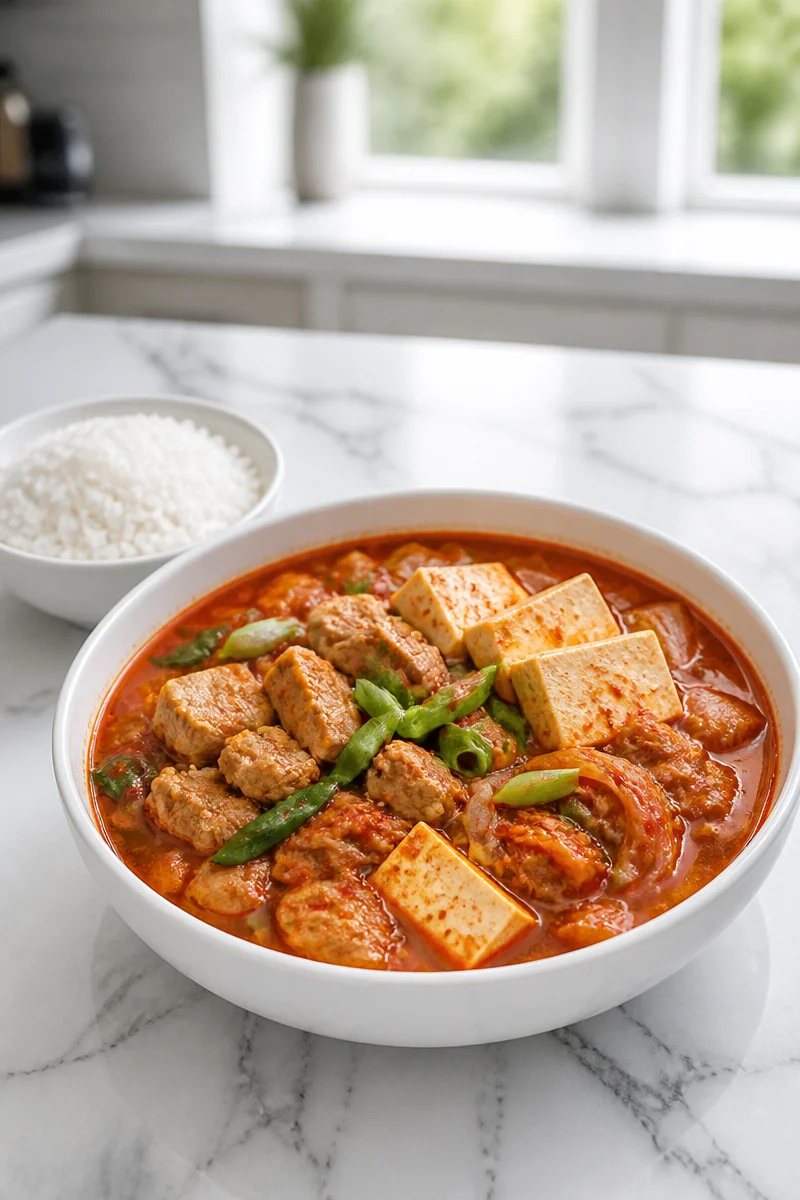
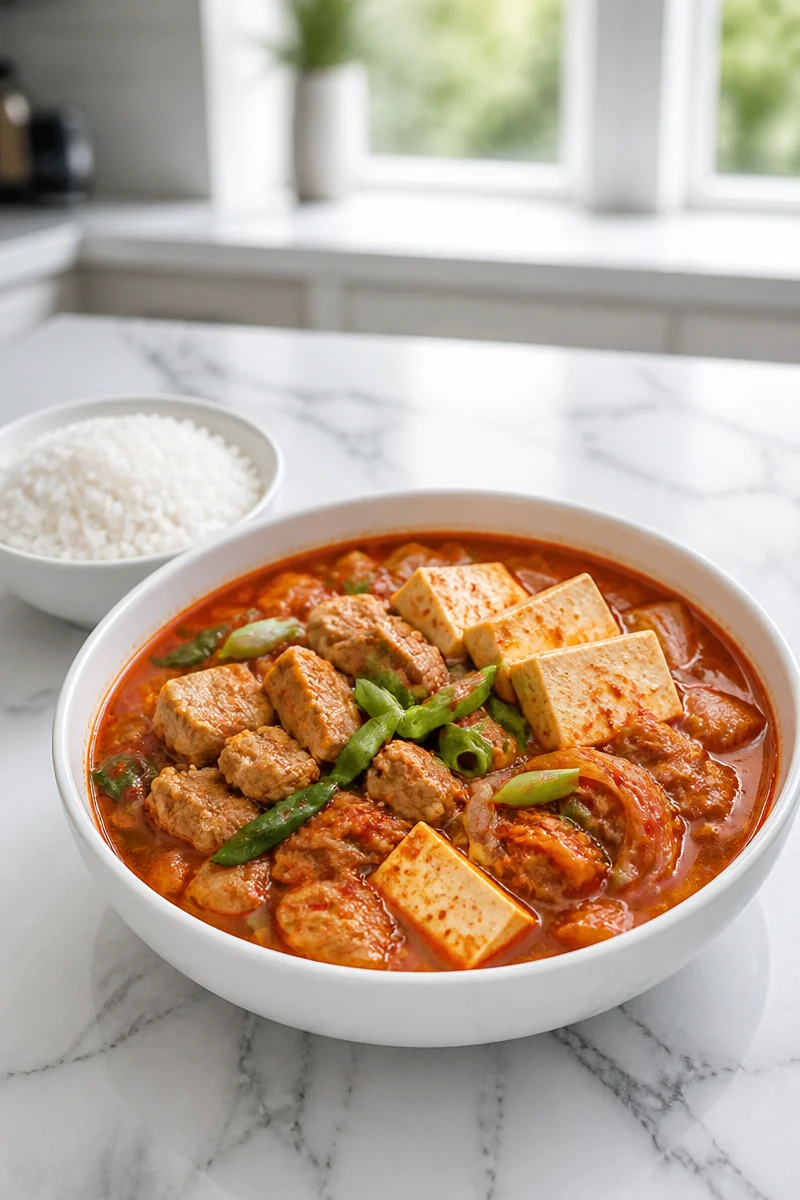
This spicy Korean kimchi jjigae pork stew is pure comfort in a bowl. It is bold, savory, and deeply satisfying, so it feels like the kind of meal you want on a cold evening or after a long day. The pork turns tender, the kimchi softens into the broth, and every spoonful tastes warm and full of life.
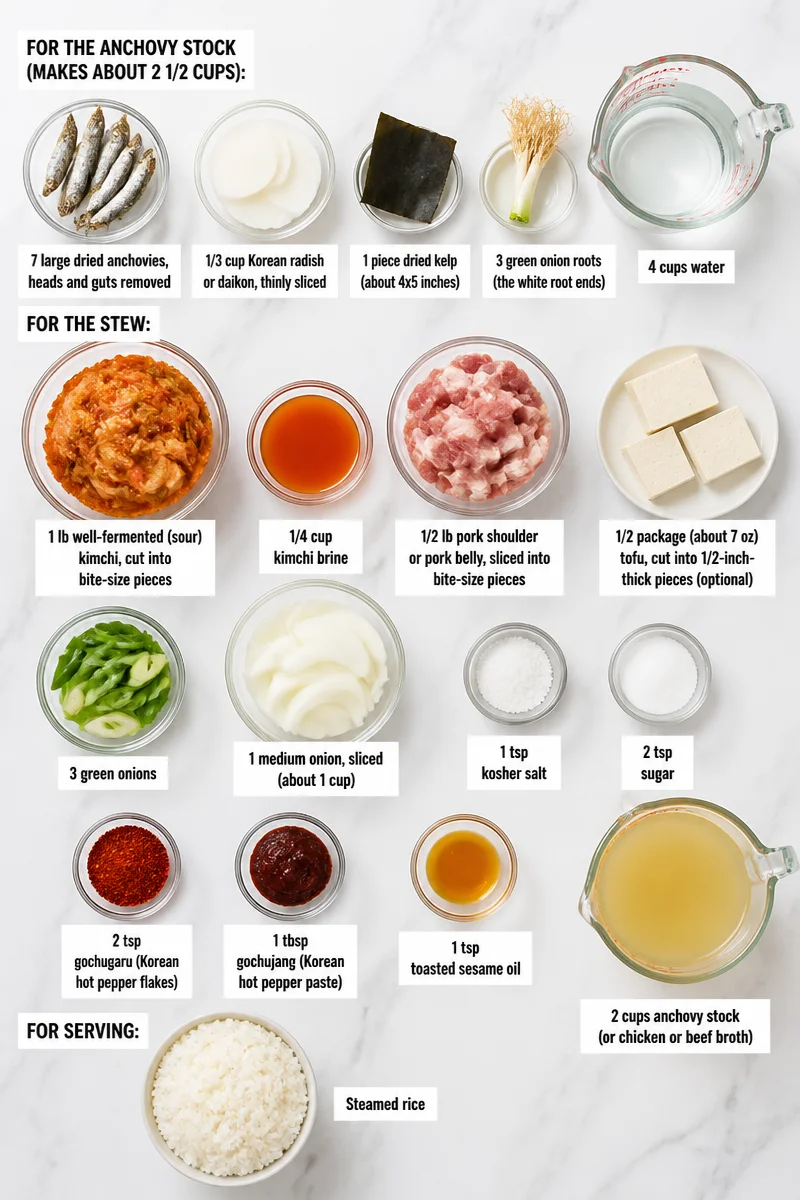
What makes this stew so special is the balance of ingredients. The anchovy stock starts with 7 large dried anchovies, 1/3 cup Korean radish or daikon, 1 piece dried kelp, 3 green onion roots, and 4 cups water, which gives the broth a clean, briny depth. Then the stew brings in 1 lb well-fermented kimchi, 1/4 cup kimchi brine, 1/2 lb pork shoulder or pork belly, 1/2 package tofu, 3 green onions, 1 medium onion, kosher salt, sugar, gochugaru, gochujang, toasted sesame oil, and 2 cups anchovy stock. Served with steamed rice, the flavor is spicy, tangy, rich, and just a little smoky.
The method is simple, too. First, you make the stock, then you build the stew in one pot, season it well, and let it simmer until the pork is tender and the broth thickens slightly. After that, you add the tofu, finish with fresh green onion, and serve it bubbling hot. Since the recipe takes 15 minutes of prep time and about 50 minutes of cooking time, it is a very manageable home-cooked meal. Also, it makes 3 servings, so it works well for a small family dinner or a cozy meal for a few days.
This stew is perfect for chilly nights, busy weeknights, and days when you want something filling without a lot of fuss. In fact, it is also a great dish to share with family because it tastes even better after the flavors have had time to settle.
Why You’ll Love This Spicy Korean Kimchi Jjigae Pork Stew
- It is comfort food at its best. The broth is hot, rich, and soothing.
- It uses simple ingredients that are easy to find in many grocery stores or Asian markets.
- It has a big, bold flavor from kimchi, pork, and Korean chili paste.
- It is a one-pot meal, which means less cleanup and less stress.
- It tastes even better the next day, so leftovers are a real treat.
Pork Shoulder or Pork Belly Tips
The best protein for this spicy Korean kimchi jjigae pork stew is pork shoulder or pork belly. Pork shoulder gives you a meaty bite and stays tender during simmering. Pork belly, on the other hand, adds more richness and a softer texture. If you want a lighter stew, choose pork shoulder. If you want a deeper, silkier broth, pork belly is a great choice. Also, try to cut the pork into even bite-size pieces so it cooks at the same pace. That way, every spoonful has a good mix of pork, kimchi, and broth.
Options for Substitutions
- Use chicken broth or beef broth instead of anchovy stock if you want a simpler shortcut.
- Swap daikon for Korean radish if that is what your store carries.
- If you do not have dried kelp, you can skip it, although the broth will be a little less deep.
- Use firm tofu if you prefer a sturdier texture, or leave the tofu out for a meatier stew.
- Replace pork with thinly sliced beef if you want a different flavor.
- If you do not have gochujang, add a little extra gochugaru and a small spoon of tomato paste for body, though the flavor will change a bit.
Watch Out for These Mistakes
One common mistake is using kimchi that is too fresh. For the best spicy Korean kimchi jjigae pork stew, you want well-fermented, sour kimchi. Fresh kimchi can still work, but the stew will taste flatter and less complex. So, if your kimchi is not very tangy yet, let it sit in the fridge a bit longer before cooking.
Another issue is rushing the stock. The anchovy stock adds a deep savory base, and that flavor really matters. However, if you boil it too hard for too long, it can turn bitter, especially if the kelp cooks too long. Because of that, follow the timing closely and strain it after simmering.
Also, be careful not to overcook the pork at too high a heat. The goal is tender pork, not dry pork. Therefore, once the stew comes together, let it simmer gently so the meat softens and the broth thickens a little. If the heat is too strong, the liquid can reduce too quickly and the stew may become too salty.
Finally, do not forget to taste before serving. Kimchi brine, gochujang, and kimchi can all vary in saltiness. So, if needed, add a little more sugar or stock to balance the flavor. A small adjustment at the end can make the whole pot taste much better.
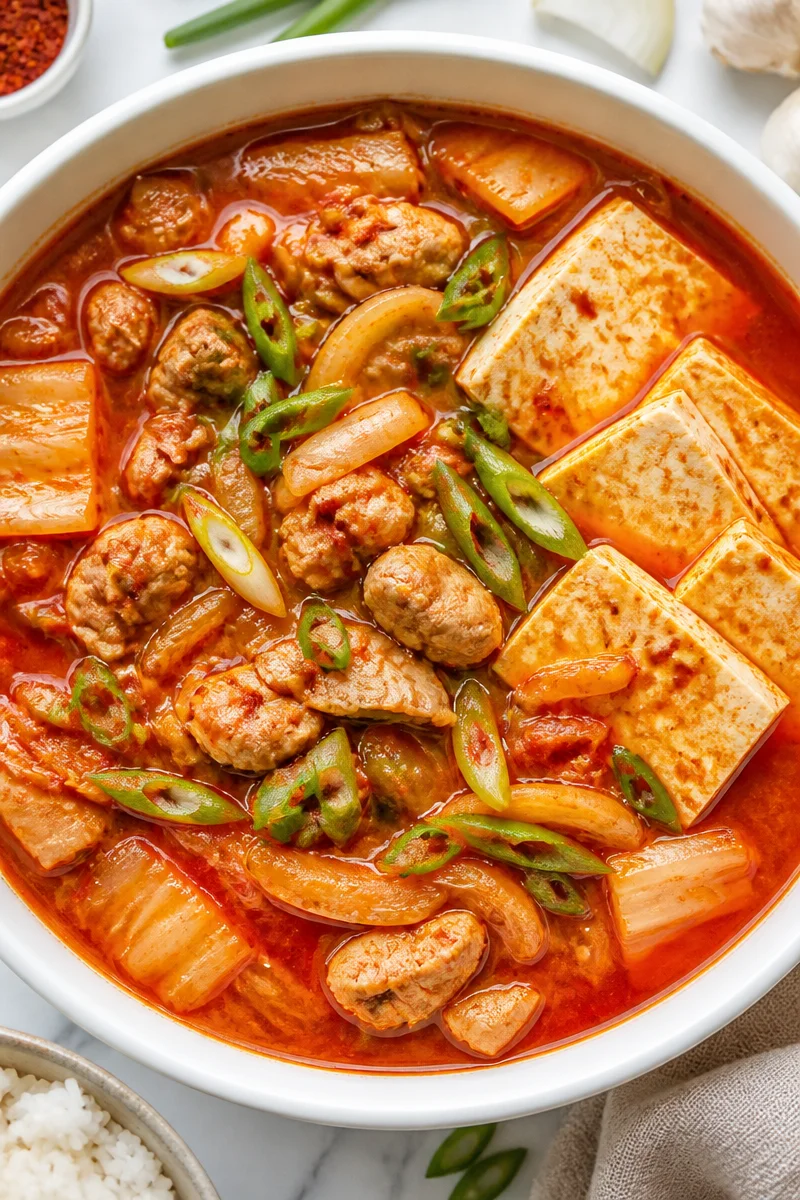
What to Serve With Spicy Korean Kimchi Jjigae Pork Stew?
This stew is best served with steamed rice, since the rice helps balance the heat and soak up the savory broth. You can also serve it with Korean spinach side dish, quick cucumber salad, or pan-fried dumplings for a fuller meal. If you want something simple, a plate of sautéed mushrooms or a few extra banchan side dishes works very well, too. Together, they make the whole meal feel complete and satisfying.
Storage Instructions
Store: Keep leftover spicy Korean kimchi jjigae pork stew in an airtight container in the fridge for up to 3 days. In fact, the flavor often gets better overnight.
Freeze: You can freeze the stew for up to 2 months. For best results, cool it first and store it in freezer-safe containers. However, if you use tofu, its texture may change a little after freezing.
Reheat: Reheat on the stovetop over medium-low heat until hot, stirring now and then. If using a microwave, heat in short bursts and stir between each one so the stew warms evenly.
Recipe Info
Preparation Time: 15 minutes
Cooking Time: 50 minutes
Total Time: 1 hour 5 minutes
Level of Difficulty: Easy
Servings: 3 servings
Calories: 380 kcal per serving
Estimated Nutrition
Estimated nutrition for the whole recipe (without optional ingredients):
Calories: 1,050 to 1,200 kcal total
Protein: 55 to 70 g total
Fat: 55 to 75 g total
Carbohydrates: 35 to 50 g total
Ingredients
- 7 large dried anchovies, heads and guts removed
- 1/3 cup Korean radish or daikon, thinly sliced
- 1 piece dried kelp (about 4×5 inches)
- 3 green onion roots (the white root ends)
- 4 cups water
- 1 lb well-fermented (sour) kimchi, cut into bite-size pieces
- 1/4 cup kimchi brine
- 1/2 lb pork shoulder or pork belly, sliced into bite-size pieces
- 1/2 package (about 7 oz) tofu, cut into 1/2-inch-thick pieces (optional)
- 3 green onions
- 1 medium onion, sliced (about 1 cup)
- 1 tsp kosher salt
- 2 tsp sugar
- 2 tsp gochugaru (Korean hot pepper flakes)
- 1 tbsp gochujang (Korean hot pepper paste)
- 1 tsp toasted sesame oil
- 2 cups anchovy stock (or chicken or beef broth)
- Steamed rice
Step-by-Step Instructions
Step 1: Make the Anchovy Stock
Place the anchovies, radish, kelp, and green onion roots in a saucepan with 4 cups of water. Bring it to a boil over medium-high heat and cook for 20 minutes. Then lower the heat and cook for 5 more minutes. After that, strain the stock and keep 2 cups for the stew. Save the rest for another use, or use chicken or beef broth if you want a shortcut.
Step 2: Build the Stew Base
Put the kimchi and kimchi brine into a shallow, wide pot. Then add the pork and sliced onion. This gives the stew a strong flavor base right away, and it also helps the pork start seasoning as it cooks.
Step 3: Add the Green Onions and Seasonings
Slice 2 of the green onions diagonally and add them to the pot. Next, add the salt, sugar, gochugaru, and gochujang. Drizzle the sesame oil over the top, and then pour in the 2 cups of stock. At this point, the pot should already smell amazing.
Step 4: Simmer the First Time
Cover the pot and cook over medium-high heat for 10 minutes. During this time, the pork starts to cook, the kimchi softens, and the broth takes on more color and flavor. So, let it bubble steadily and do its work.
Step 5: Add the Tofu and Finish Cooking
Uncover the pot and stir the seasonings into the stew. Then lay the tofu pieces on top. Cover again and cook over medium heat for another 10 to 15 minutes, until the pork is tender and the broth is rich and slightly thickened. If you are skipping the tofu, the stew still works beautifully.
Step 6: Finish and Serve
Chop the remaining green onion and scatter it over the top. Remove the pot from the heat, then serve the stew right away while it is bubbling hot. Spoon it over steamed rice, and enjoy every warm, spicy bite.
This spicy Korean kimchi jjigae pork stew is hearty, flavorful, and easy to love. It brings together sour kimchi, tender pork, savory stock, and a gentle heat that feels just right with rice. So, if you want a cozy meal that tastes like it took all day but comes together in a little over an hour, give this recipe a try. Then come back and share how it went, or explore more comforting Korean-inspired meals for your next dinner.
Print
Spicy Korean Kimchi Jjigae Pork Stew
- Prep Time: 15 minutes
- Cook Time: 50 minutes
- Total Time: 65 minutes
- Yield: 3 servings 1x
- Category: Main Course
- Method: Stewing
- Cuisine: Korean
- Diet: Pork
Description
A comforting and hearty stew featuring tender pork, well-fermented kimchi, and a flavorful anchovy stock, perfect for cold nights.
Ingredients
- 7 large dried anchovies, heads and guts removed
- 1/3 cup Korean radish or daikon, thinly sliced
- 1 piece dried kelp (about 4×5 inches)
- 3 green onion roots (the white root ends)
- 4 cups water
- 1 lb well-fermented kimchi, cut into bite-size pieces
- 1/4 cup kimchi brine
- 1/2 lb pork shoulder or pork belly, sliced into bite-size pieces
- 1/2 package (about 7 oz) tofu, cut into 1/2-inch-thick pieces (optional)
- 3 green onions
- 1 medium onion, sliced (about 1 cup)
- 1 tsp kosher salt
- 2 tsp sugar
- 2 tsp gochugaru (Korean hot pepper flakes)
- 1 tbsp gochujang (Korean hot pepper paste)
- 1 tsp toasted sesame oil
- 2 cups anchovy stock (or chicken or beef broth)
- Steamed rice
Instructions
- Make the Anchovy Stock: Place the anchovies, radish, kelp, and green onion roots in a saucepan with 4 cups of water. Bring it to a boil over medium-high heat and cook for 20 minutes. Then lower the heat and cook for 5 more minutes. After that, strain the stock and keep 2 cups for the stew.
- Build the Stew Base: Put the kimchi and kimchi brine into a shallow pot. Add the pork and sliced onion to form a strong flavor base.
- Add the Green Onions and Seasonings: Slice 2 green onions diagonally and add to the pot. Then add salt, sugar, gochugaru, gochujang, and drizzle with sesame oil. Pour in the 2 cups of stock.
- Simmer the First Time: Cover the pot and cook over medium-high heat for 10 minutes.
- Add the Tofu and Finish Cooking: Uncover the pot, stir in the seasonings, then lay the tofu pieces on top. Cook over medium heat for another 10 to 15 minutes, until the pork is tender and the broth is rich.
- Finish and Serve: Chop remaining green onion and sprinkle over the top. Serve the stew hot over steamed rice.
Notes
This stew is even better the next day as the flavors deepen. Perfect for cold nights and busy weeknights.
Nutrition
- Serving Size: 1 serving
- Calories: 380
- Sugar: 3g
- Sodium: 600mg
- Fat: 20g
- Saturated Fat: 7g
- Unsaturated Fat: 8g
- Trans Fat: 0g
- Carbohydrates: 25g
- Fiber: 2g
- Protein: 28g
- Cholesterol: 70mg