
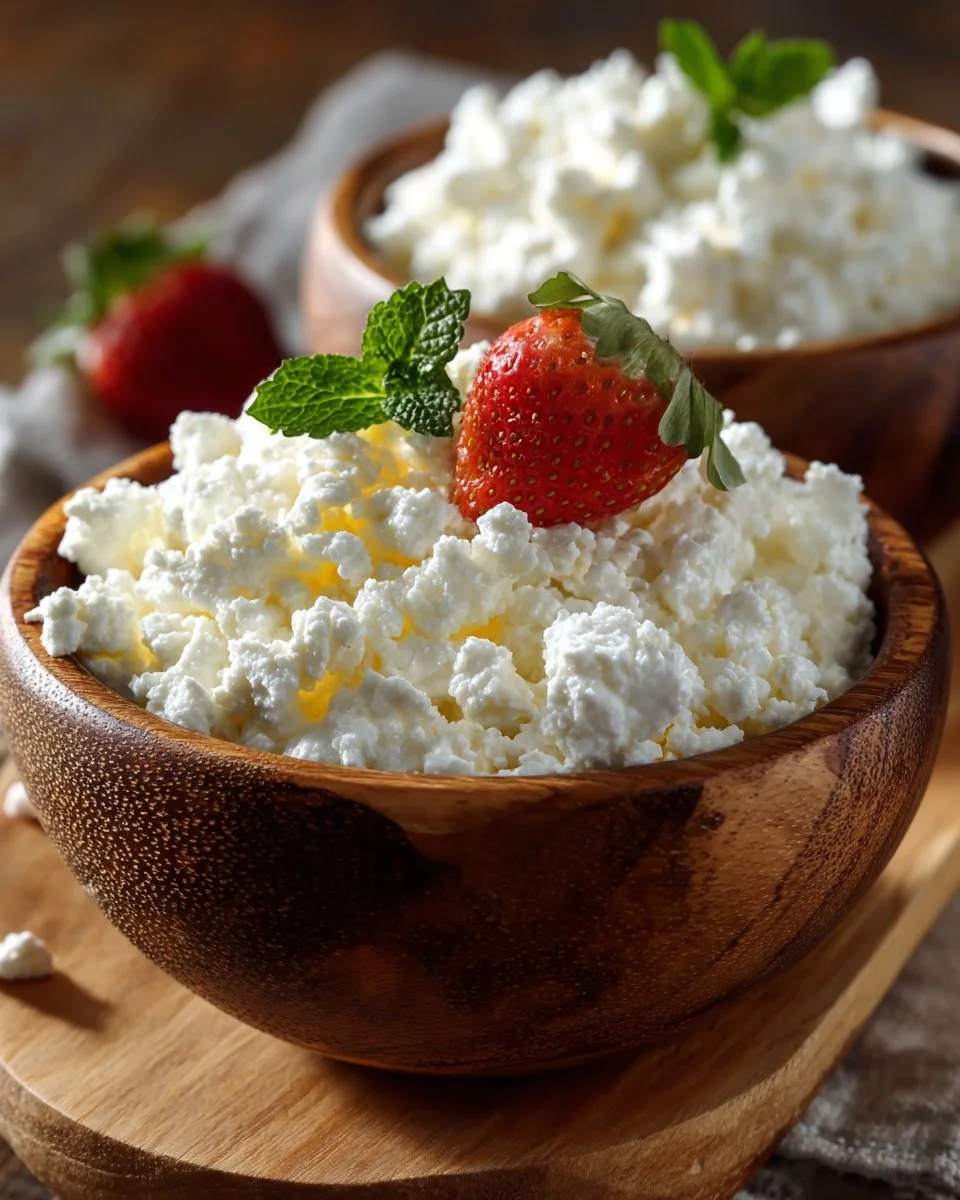
Can a simple kitchen trick give you fresher, creamier homemade cottage cheese than store-bought tubs and save you money? Homemade cottage cheese is a quick, budget-friendly way to enjoy fresh curds with control over texture and salt and yes, it often tastes better than many commercial varieties. In the next few minutes you’ll learn a reliable method using just milk, vinegar (or lemon), and salt, plus practical tips to tailor texture and nutrition. If you like experimenting, try these curds in recipes like these cottage cheese egg bites for a protein-packed breakfast.
Ingredients Needed
- 1 quart of milk (whole or low-fat) Creamy whole milk produces richer curds; low-fat yields lighter, tangier curds. Use pasteurized milk for safety.
- 1/4 cup white vinegar or lemon juice Acid that separates curds and whey. Lemon juice gives a fresher, citrus note; vinegar is neutral and consistent.
- 1/2 teaspoon of salt Enhances flavor. Use sea salt for subtle mineral notes or kosher salt for ease of measuring.
Substitutions and notes
- Non-dairy milks generally won’t form curds the same way; stick to cow’s milk for authentic results.
- For tangier cottage cheese, substitute up to half the vinegar with lemon juice.
- Add 1–2 tablespoons of cream after draining for “creamed cottage cheese” texture.
For inspiration on creative uses, you might enjoy a nostalgic sweet twist like this cottage cheese jello salad.
Timing
- Preparation time: 5 minutes
- Cooking/heating time: 8–10 minutes (heat to simmer)
- Resting/draining time: 10–20 minutes
- Total time: 25–35 minutes
This method takes about 30 minutes, which is roughly 45% faster than some slow-culture cottage cheese methods that require refrigeration for several hours. It’s fast enough for same-day breakfast or meal prep.
How to Make Homemade Cottage Cheese
Step 1: Heat the milk
In a saucepan, heat the milk over medium heat until it begins to simmer. Watch carefully so it doesn’t boil over; bubbling edges and steam are signs you’re there. Tip: Use a heavy-bottomed pan for even heat.
Step 2: Acidify to form curds
Remove the saucepan from heat and add the vinegar or lemon juice, stirring gently. You’ll see the milk separate into curds (solid) and whey (clear-ish liquid) within minutes. If separation is slow, add another teaspoon of acid.
Step 3: Let curds set
Allow the mixture to sit for about 5–10 minutes until curds form. This rest time lets curds firm up for easier draining. For firmer curds, wait the full 10 minutes.
Step 4: Drain the curds
Line a colander with cheesecloth and pour the curds into it, allowing the whey to drain. Gently gather the cloth and hang for extra drainage if you want drier curds.
Step 5: Rinse
Rinse the curds under cold water to remove the vinegar or lemon flavor and cool them down. This sharp rinse helps neutralize acidity and firms texture.
Step 6: Season and finish
Mix in salt to taste (start with 1/2 teaspoon) and, optionally, add a tablespoon of cream for richness. Your homemade cottage cheese is ready!

Actionable tips
- For chunkier curds, stir less during step 2.
- For smoother curds, break them gently with a spoon after draining and add cream.
- Save the whey it’s full of protein and can be used in smoothies, bread, or soups.
Nutritional Information
Estimated nutrition per 1/2 cup serving (made from whole milk, yields will vary by milk fat and amount of cream added):
- Calories: ~120 kcal
- Protein: 10–12 g
- Fat: 6–8 g
- Carbohydrates: 3–4 g
- Sodium: 150–250 mg (depends on added salt)
Protein content is the standout cottage cheese gives about 20–25% of daily protein needs per cup for many adults, making it ideal for muscle recovery and satiety. Using low-fat milk reduces calories and fat while keeping protein similar. If precise macronutrients matter, weigh your final curds and use USDA values for the specific milk you used.
Healthier Alternatives For Homemade Cottage Cheese
- Lower fat: Use 1% or skim milk to cut fat by up to 80% compared with whole milk curds.
- Lower sodium: Reduce added salt or use potassium-based salt substitutes.
- Higher protein: Mix in plain Greek yogurt (unsweetened) for creaminess and extra protein without too much fat.
- Keto-friendly: Use full-fat milk and add heavy cream; watch portion sizes for carbs.
- Allergies: If lactose intolerance is mild, draining whey and rinsing curds reduces lactose; otherwise, choose lactose-free milk.
Try a dessert spin by using some of your curds in a ricotta-like layer for an amaretto cheesecake-inspired treat.
Serving Suggestions
- Breakfast bowl: Mix curds with fresh berries, a drizzle of honey, and toasted almonds.
- Savory toast: Spread on sourdough, top with sliced tomato, cracked pepper, and microgreens.
- Protein swap: Use on salads as a ricotta substitute or fold into omelets (see easy egg bite ideas).
- Appetizer: Make a holiday spread by shaping curds into a cheeseball and decorating like an antipasto Christmas tree cheeseball.
For an impressive snack board, serve plain curds alongside olives, roasted peppers, and crunchy crackers it’s a crowd-pleaser with minimal prep.
Common Mistakes To Avoid
- Overheating milk: Boiling ruins texture stop at simmer.
- Too much stirring: Aggressive stirring breaks curds into tiny pieces; be gentle.
- Skipping the rinse: Rinsing removes excess acidity; skip it and your curds may taste vinegary.
- Draining too long: Over-draining yields dry curds; short hang time keeps creaminess.
- Wrong milks: Using ultra-pasteurized milk can reduce curd formation; stick to regular pasteurized milk.
Storing Tips For Homemade Cottage Cheese
Refrigerate in an airtight container for up to 5 days. For best texture, stir in a tablespoon of cream before storing to maintain moisture. Freeze? Not recommended freezing changes texture and makes curds grainy. Label with date and use within a workweek for freshness.
Conclusion
Making homemade cottage cheese is fast, flexible, and rewarding three ingredients and about 30 minutes yield fresh curds you can customize for taste and nutrition. Try the basic method, then experiment with textures, cream levels, and pairings. If you try this recipe, share your results or a photo and explore related recipes on the site for inspiration.
Frequently Asked Questions
Is homemade cottage cheese safe to eat?
Yes, when using pasteurized milk and clean equipment. Heat the milk to simmer and handle curds with clean hands or utensils. Store refrigerated and consume within 5 days.
Can I use raw milk?
Raw milk can produce curds but carries food-safety risks; pasteurized milk is recommended for home cooks.
How can I make the curds bigger or smaller?
For larger curds, stir less and use whole milk. For smaller curds, stir gently after adding acid or strain for longer.
What can I do with leftover whey?
Whey is a nutritious byproduct use it in smoothies, replace water in bread recipes for extra protein, or add to soups and sauces for depth.
Print
Homemade Cottage Cheese
- Prep Time: 5 minutes
- Cook Time: 10 minutes
- Total Time: 30 minutes
- Yield: 4 servings 1x
- Category: Breakfast
- Method: No cooking method applicable
- Cuisine: American
- Diet: Vegetarian
Description
A quick and budget-friendly recipe for fresh, creamy cottage cheese, customizable for texture and salt.
Ingredients
- 1 quart of milk (whole or low-fat)
- 1/4 cup white vinegar or lemon juice
- 1/2 teaspoon of salt
Instructions
- In a saucepan, heat the milk over medium heat until it begins to simmer.
- Remove the saucepan from heat and add the vinegar or lemon juice, stirring gently.
- Allow the mixture to sit for about 5–10 minutes until curds form.
- Line a colander with cheesecloth and pour the curds into it, allowing the whey to drain.
- Rinse the curds under cold water to remove the vinegar or lemon flavor.
- Mix in salt to taste and optionally add a tablespoon of cream for richness.
Notes
For chunkier curds, stir less during step 2. Save the whey for smoothies, bread, or soups.
Nutrition
- Serving Size: 1/2 cup
- Calories: 120
- Sugar: 4g
- Sodium: 200mg
- Fat: 7g
- Saturated Fat: 4g
- Unsaturated Fat: 2g
- Trans Fat: 0g
- Carbohydrates: 4g
- Fiber: 0g
- Protein: 11g
- Cholesterol: 20mg