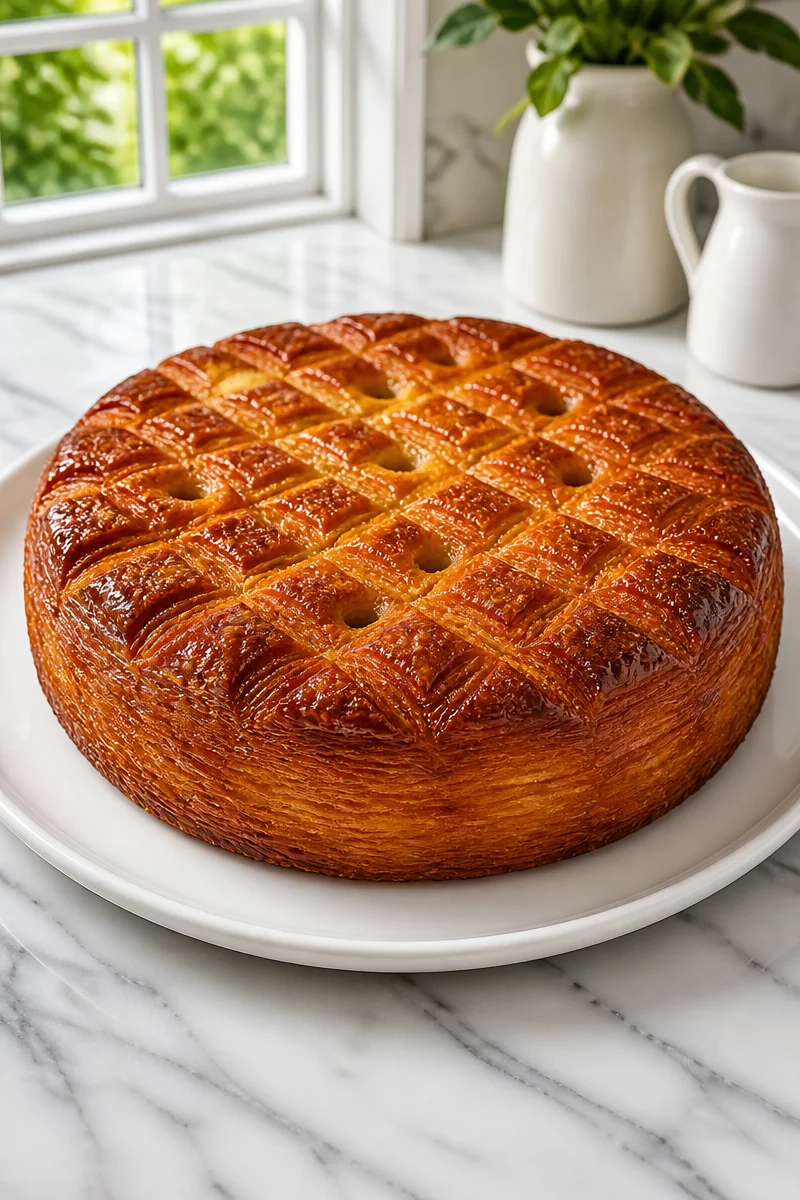
It is hard to beat a warm slice of Kouign-Amann when you want pure comfort. This Breton butter cake is rich, crisp, sweet, and just a little bit salty, so every bite feels special. I love recipes like this because they feel bakery-fancy, yet they still make sense in a home kitchen.
At its heart, this Homemade Kouign-Amann Breton Butter Cake uses 2 1/4 cups (270 g) unbleached all-purpose flour, 3/4 teaspoon table salt, 1/2 teaspoon instant yeast, and 3/4 cup plus 1 tablespoon (184 g) warm water for the dough. Then, the butter block brings in 12 tablespoons (170 g) salted butter and 1 cup (198 g) granulated sugar, while the finish gets a shine from 1 large egg, beaten with a pinch of salt. The flavor is deeply buttery, lightly caramelized, and sweet with a gentle salty edge that keeps it from tasting too heavy.
The method looks impressive, but it is very doable if you take it one step at a time. First, you stir the dough together, let it rise, and prepare a chilled butter-sugar block. Then, you roll, fold, and shape it into layers before baking it until deep golden brown. So, even though it sounds like a pastry project, the process is really a series of simple moves done with care.
This Homemade Kouign-Amann Breton Butter Cake is wonderful for weekend baking, coffee breaks, holiday brunch, or a cozy dessert after supper. Because it is best served slightly warm, it feels especially nice on chilly nights. And since it makes 8 servings, it is also a lovely treat to share with family, friends, or neighbors.
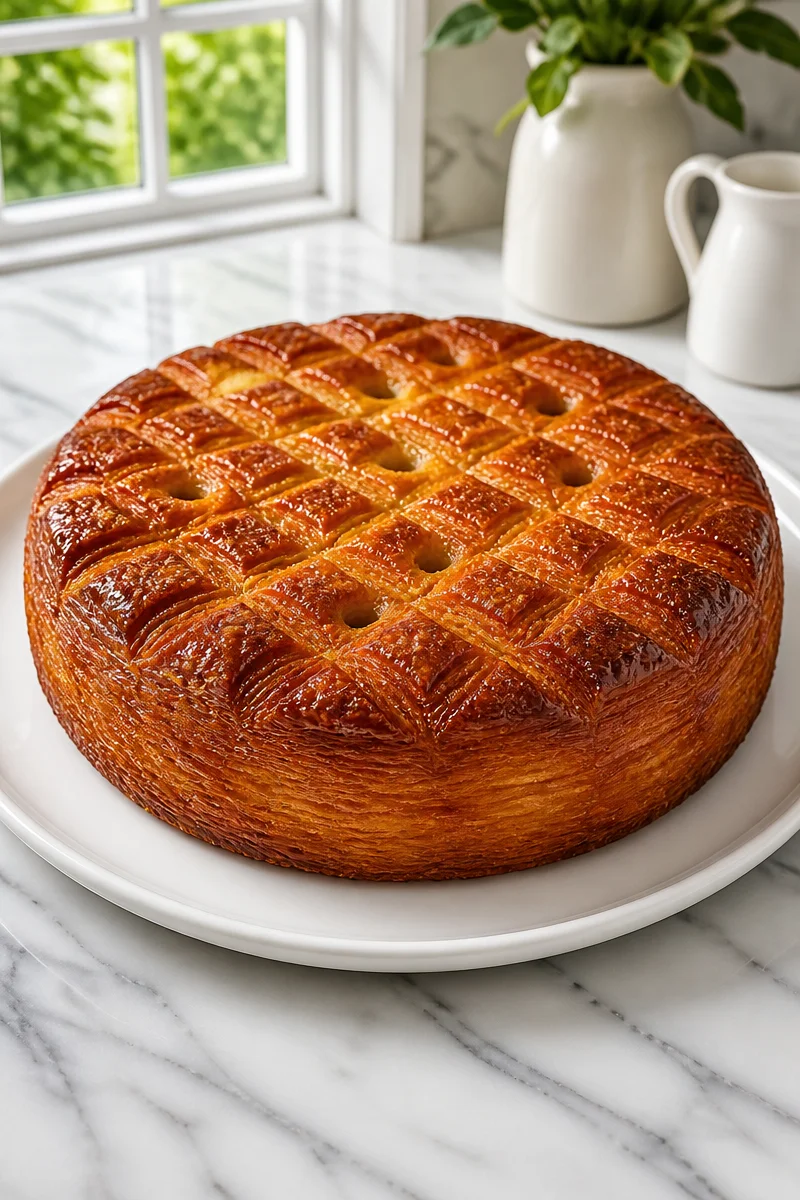
Why You’ll Love This Homemade Kouign-Amann Breton Butter Cake
- It has a crisp, caramelized top and a tender, layered center.
- The ingredient list is short, so the recipe feels approachable.
- The sweet and salty balance makes each bite interesting.
- It is a great baking project when you want something special at home.
- It tastes best warm, which makes it feel extra comforting and fresh.
Flour Tips
The main ingredient here is unbleached all-purpose flour, and that matters more than you might think. Because this dough is meant to be rolled and folded, you want a flour that is reliable and easy to work with. Choose a fresh bag, and if the flour seems lumpy or stale, sift it before mixing. Also, measure carefully, since too much flour can make the dough dry and harder to roll. For best results, spoon the flour into the cup and level it off, or use a kitchen scale if you have one.
Options for Substitutions
- Use bread flour instead of all-purpose flour if you want a slightly chewier structure.
- Swap salted butter with unsalted butter, then add a small pinch more salt if needed.
- If you only have active dry yeast, use it in place of instant yeast, but dissolve it in the warm water first and give it a few extra minutes to wake up.
- Use fine sea salt instead of table salt, but start with a little less since it can taste stronger.
- If you want a lighter sweetness, reduce the granulated sugar slightly, though the texture may change a bit.
- Replace the egg wash with cream or milk for a softer finish if you prefer less shine.
Watch Out for These Mistakes
One common mistake is overworking the dough at the start. The dough should look shaggy, and that is okay. If you knead it too much, it can become tough and harder to roll later. Instead, mix just until no dry flour remains, then let time do the work.
Another problem is letting the butter block get too soft. If it warms up too much, it can leak out while you roll and fold. So, keep it cold, but still pliable. If it starts feeling greasy or sticky, chill it again before moving on.
You also need to work quickly once the sugar hits the dough. Sugar pulls moisture from the dough, and that can make the layers harder to manage. For that reason, keep your motions steady and confident, and do not stop too long between folds.
Finally, do not underbake this cake. The top should be deep golden brown, not pale. Since the sugar caramelizes during baking, the color gives you a strong clue about flavor and texture. If you pull it too early, you may miss that signature crisp shell.
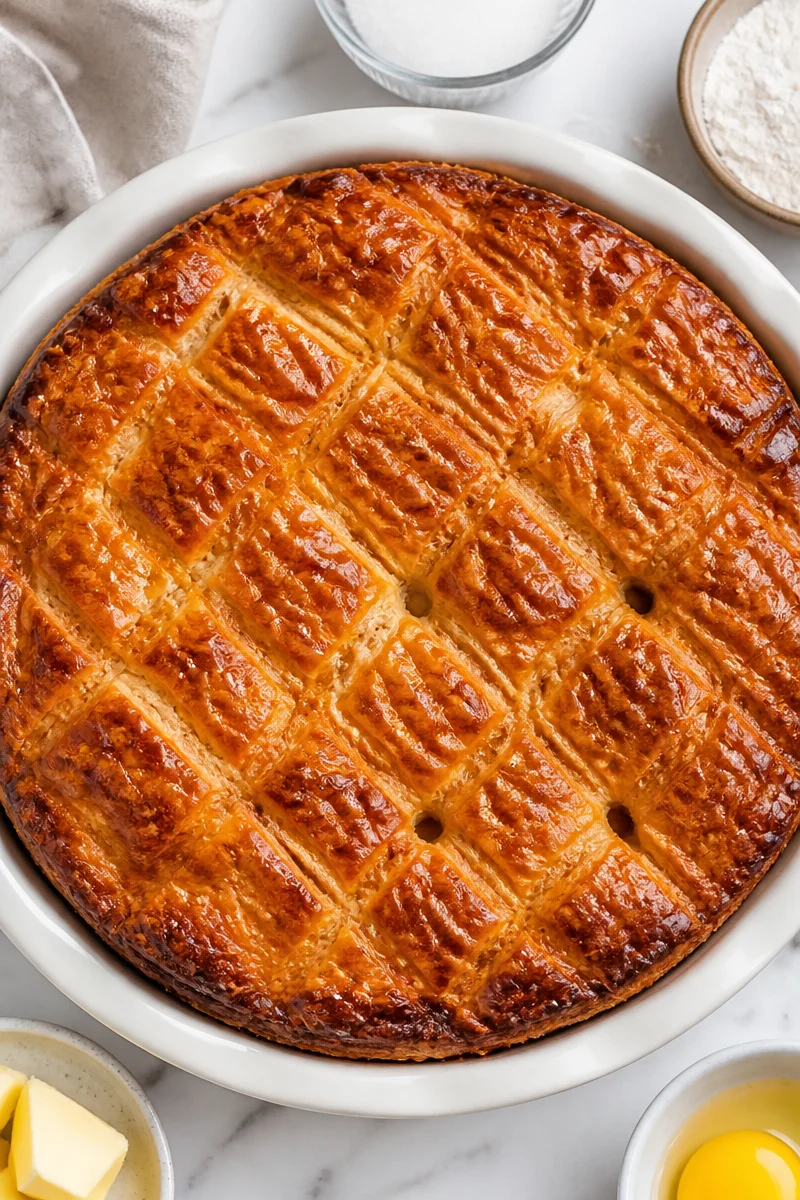
What to Serve With Homemade Kouign-Amann Breton Butter Cake?
This Homemade Kouign-Amann Breton Butter Cake pairs well with simple, gentle sides that balance its rich flavor. A hot cup of coffee or black tea works beautifully, since the bitterness cuts through the butter and sugar. Fresh berries are also a smart choice, because their brightness lifts each bite. If you want something creamy, try plain Greek yogurt or lightly whipped crème fraîche. And for a fuller brunch spread, a fruit salad or soft scrambled eggs can round things out without overpowering the cake.
Storage Instructions
Store: Wrap the Homemade Kouign-Amann Breton Butter Cake well and keep it at room temperature for up to 24 hours. If you want to keep it longer, the texture is best when enjoyed fresh.
Freeze: You can freeze it for up to 1 month. Wrap it tightly in plastic wrap, then place it in a freezer bag or airtight container. Thaw at room temperature before reheating.
Reheat: For the stovetop, warm a slice in a covered skillet over very low heat for a few minutes until the outside firms up again. For the microwave, heat a slice in short bursts of 10 to 15 seconds, just until warm. After that, if you want more crispness, pop it in a low oven for a few minutes.
Recipe Info
Preparation Time: 45 minutes, plus 2 hours rise and 1 hour cooling
Cooking Time: 1 hour
Total Time: 4 hours 45 minutes
Difficulty: Medium
Servings: 8 servings
Calories: 380 kcal per serving
Estimated Nutrition
Estimated nutrition for the whole recipe (without optional ingredients):
Calories: 3,000 to 3,300 kcal
Protein: 35 to 45 g
Fat: 180 to 210 g
Carbohydrates: 300 to 340 g
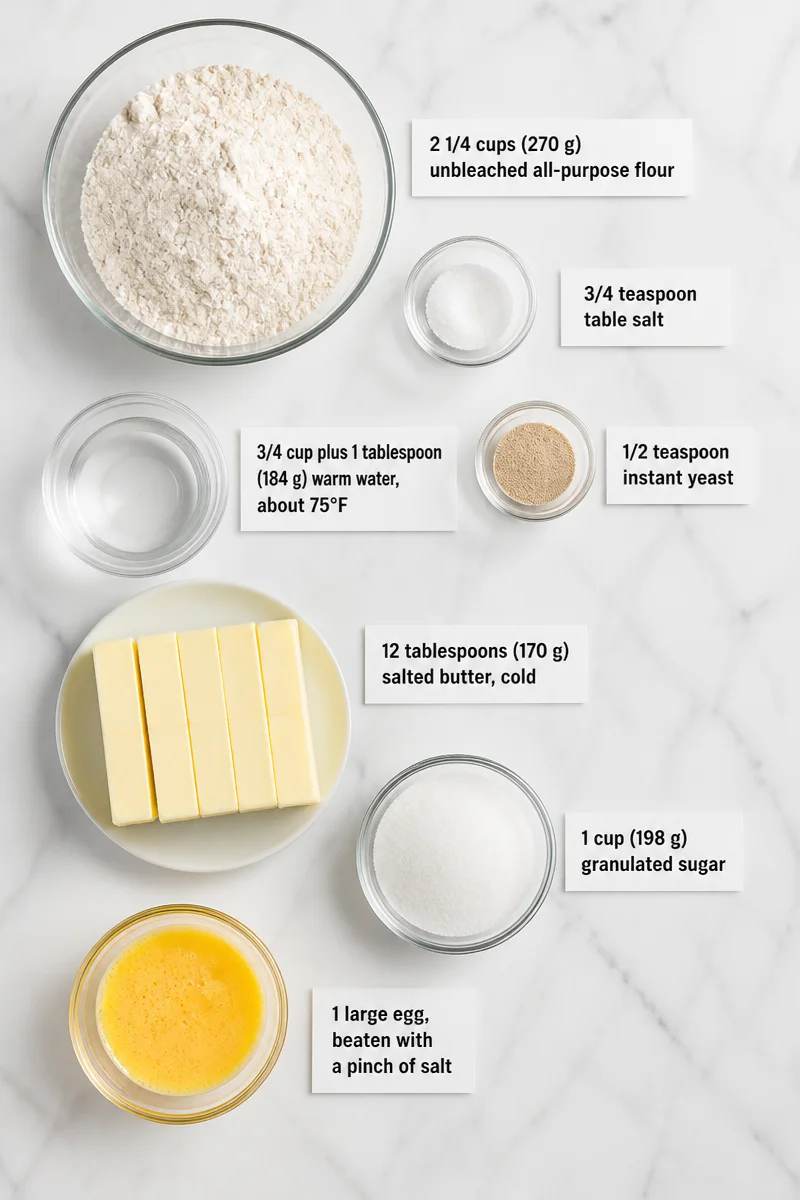
Ingredients
- Dough:
- 2 1/4 cups (270 g) unbleached all-purpose flour
- 3/4 teaspoon table salt
- 1/2 teaspoon instant yeast
- 3/4 cup plus 1 tablespoon (184 g) warm water, about 75°F
- Butter block:
- 12 tablespoons (170 g) salted butter, cold
- 1 cup (198 g) granulated sugar
- Egg wash:
- 1 large egg, beaten with a pinch of salt
Step-by-Step Instructions
Step 1: Mix the Dough
Stir the flour, salt, and yeast together in a medium bowl. Add the warm water, then mix by hand until no dry flour remains. The dough will look shaggy, and that is exactly what you want. Do not overwork it, because a gentle mix keeps the dough easier to handle later.
Step 2: Let the Dough Rise
Cover the bowl loosely and let the dough rise at about 75°F until it looks puffy and about 1 1/2 times its original size. This usually takes 90 to 120 minutes. While you wait, the dough relaxes and develops the strength it needs for folding.
Step 3: Prepare the Parchment and Butter Block
Fold a 16 x 12-inch sheet of parchment into a 7-inch square with flaps on all four sides. Crease it well, then unfold it and set it aside. Next, tap the cold butter with a rolling pin 8 to 10 times until it is just pliable. Cut it into rough 1/2-inch pieces, then work it with the sugar until it becomes a uniform, dough-like mass. Spread that mixture in the center of the parchment, refold the flaps, flip it over, and roll it until it fills the packet evenly. Chill the butter block until you need it.
Step 4: Laminate and Shape the Dough
About 15 minutes before the dough finishes rising, take out the butter block and preheat the oven to 375°F with a rack in the upper-middle position. On a floured surface, roll the dough into a 16 x 8-inch oval. Unwrap the butter block and place it in the center, then fold the short ends over it so they meet and pinch the seams shut. Flour generously, turn the dough 90 degrees, and press along the length with the rolling pin to seal. Roll it to an 18 x 8-inch rectangle, fold it into thirds like a letter, brush off flour, turn 90 degrees, and repeat once more. Move quickly, because the sugar will pull moisture out of the dough.
Step 5: Shape, Score, and Bake
Roll the dough into a 14-inch square. Fold the corners in toward the center, tuck them, and gather the dough into a 7-inch disk. Flip the disk onto the reserved parchment and roll it gently to a 9-inch round. Brush off excess flour. Then cut 1/4-inch-deep parallel lines about 1 inch apart across the top, turn it 30 degrees, and cut again to make a crosshatch. Poke 6 to 8 holes all the way through at the crosshatch intersections. Use the parchment as a sling to lower the dough into a 9-inch round cake pan and press it gently into the corners. Brush the top with egg wash, then bake for 50 to 60 minutes until deep golden brown.
Step 6: Cool and Serve
Cool the cake for about 1 hour before slicing. It is best slightly warm, because the edges stay crisp and the center stays tender. If you want to hold it longer, wrap it well and keep it at room temperature for up to 24 hours. Then rewarm it briefly in a low oven to bring back the crisp top.
Conclusion
Homemade Kouign-Amann Breton Butter Cake is one of those recipes that feels special from the first bite. It has a crisp, caramelized crust, a rich buttery center, and just the right balance of sweet and salty. Plus, the method may look fancy, but it breaks down into clear, manageable steps.
If you enjoy warm pastries, classic French baking, or simply want a show-stopping treat for your table, this recipe is worth making. So go ahead and give it a try, then come back and share how it turned out. And if you enjoyed this post, explore more cozy baking recipes for your next home kitchen project.
Print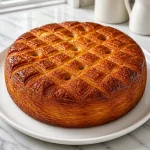
Homemade Kouign-Amann Breton Butter Cake
- Prep Time: 45 minutes
- Cook Time: 60 minutes
- Total Time: 285 minutes
- Yield: 8 servings 1x
- Category: Dessert
- Method: Baking
- Cuisine: French
- Diet: Vegetarian
Description
This Breton butter cake is richly sweet, slightly salty, with a crisp caramelized top, making it a perfect cozy dessert.
Ingredients
- 2 1/4 cups (270 g) unbleached all-purpose flour
- 3/4 teaspoon table salt
- 1/2 teaspoon instant yeast
- 3/4 cup plus 1 tablespoon (184 g) warm water
- 12 tablespoons (170 g) salted butter, cold
- 1 cup (198 g) granulated sugar
- 1 large egg, beaten with a pinch of salt
Instructions
- Mix the flour, salt, and yeast together in a medium bowl. Add the warm water, then mix by hand until no dry flour remains.
- Let the dough rise at about 75°F until it looks puffy and about 1 1/2 times its original size (90 to 120 minutes).
- Prepare a sheet of parchment and tap the cold butter until pliable, then work it with sugar until uniform.
- Laminate the dough by rolling it into an oval, encasing the butter block, then folding and rolling it multiple times.
- Shape the dough into a square, score the top, and poke holes before placing it in a cake pan.
- Bake until deep golden brown, about 50 to 60 minutes, then let cool for 1 hour before serving.
Notes
Best served slightly warm; wrap well to keep fresh for 24 hours.
Nutrition
- Serving Size: 1 serving
- Calories: 380
- Sugar: 20g
- Sodium: 350mg
- Fat: 22g
- Saturated Fat: 12g
- Unsaturated Fat: 8g
- Trans Fat: 0g
- Carbohydrates: 45g
- Fiber: 1g
- Protein: 6g
- Cholesterol: 50mg